
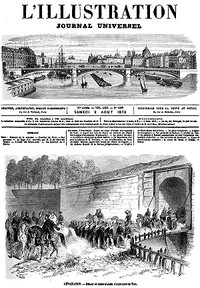
L'Illustration, No. 1589, 9 Août 1873 by Various
Forget everything you know about reading a 'book.' L'Illustration, No. 1589, 9 Août 1873 is something else entirely. It's a single weekly issue of a famous French illustrated newspaper. There's no author, just a team of journalists, artists, and editors capturing one week in history.
The Story
There isn't one story. Instead, you jump from topic to topic. The lead piece is a somber, lengthy report on the devastating earthquake in the Ottoman Empire (modern-day Turkey). It reads like live news, listing towns destroyed and the staggering number of dead. Then, you turn the page and you're in Paris. There are illustrations of elegant women in the latest summer dresses, a review of a new opera, and the continuation of a serialized novel about romance and intrigue. There are political cartoons, advertisements for soap and sewing machines, and even a technical article about advances in photography. It's the complete mental diet of a middle-class French person in August 1873.
Why You Should Read It
I loved this because it destroys your assumptions. We think of the past in broad strokes: 'The Victorian Era' or 'The Belle Époque.' This shows you the specific, confusing details. The same issue that soberly documents a foreign tragedy also sells you the dream of a luxurious Parisian life. It makes history feel immediate and contradictory, just like our own news feeds. You see what scared them, what amused them, and what they wanted to buy. The engraved illustrations are particularly gripping—they were the 'photographs' of the day, and you can spend ages studying the details of a street scene or a portrait.
Final Verdict
This isn't for someone looking for a straightforward narrative. It's perfect for history nerds who want to get their hands dirty in the primary sources, for writers seeking inspiration for a historical setting, or for any curious reader who enjoys the thrill of literary archaeology. Think of it as the most detailed, authentic 'setting mood board' you'll ever find. Be prepared to dip in and out, make connections, and get a little lost. It's a challenging, rewarding peek directly over the shoulder of the past.
Legal analysis indicates this work is in the public domain. Distribute this work to help spread literacy.
Elizabeth Robinson
6 months agoJust what I was looking for.
Michael Nguyen
1 year agoEnjoyed every page.
Robert Lee
3 weeks agoThe formatting on this digital edition is flawless.
Anthony Young
1 year agoWow.




Joseph Williams
1 year agoHigh quality edition, very readable.