
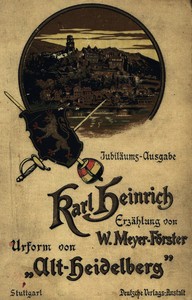
Karl Heinrich by Wilhelm Meyer-Förster
Let's set the scene: Germany, the late 1800s. Karl Heinrich is a young man being groomed for a life of leadership and duty. But his world shatters when he learns a devastating secret. He is not who he thinks he is. He's not of noble birth; he's a commoner, strategically placed in a royal household as a child to secure a political alliance. His entire identity is a performance.
The Story
The plot kicks into gear when this secret threatens to come out. Karl is torn. Does he continue the charade, living a comfortable lie for the supposed 'greater good' of the state? Or does he reject it all, even if it means losing his title, his position, and the only family he's ever known? We follow him as he grapples with this impossible choice. The people around him—the 'father' who isn't his father, the courtiers who depend on the lie, the love interests who see either the prince or the man—all pull him in different directions. It's a tight, tense story about one man caught between personal truth and public duty.
Why You Should Read It
What got me about this book is how raw Karl's confusion feels. Meyer-Förster makes you feel that dizzying loss of self. One minute you're sure of your place in the world, the next, the ground is gone. It's not really about crowns and castles; it's about that universal fear of being a fraud in your own life. The supporting characters aren't just villains or heroes; they're all trapped in the same web of deception, which makes their choices fascinating. The writing is clear and direct, focusing on emotional stakes over elaborate descriptions, so you get pulled right into Karl's head.
Final Verdict
This is a great pick if you love character-driven historical fiction that feels personal. If you enjoyed the 'man versus society' tension of novels like The Scarlet Pimpernel or the identity themes in The Prince and the Pauper, but want something with a more intimate, psychological punch, you'll find a lot to love here. It's for readers who like their history with a big side of heart and a central question that lingers long after the last page: How much of who we are is truly our own?
This work has been identified as being free of known copyright restrictions. You are welcome to share this with anyone.
Liam Brown
6 months agoSurprisingly enough, the arguments are well-supported by credible references. I would gladly recommend this title.
Margaret Lee
1 year agoI stumbled upon this title and it challenges the reader's perspective in an intellectual way. One of the best books I've read this year.

Brian Thomas
2 weeks agoMy professor recommended this, and I see why.